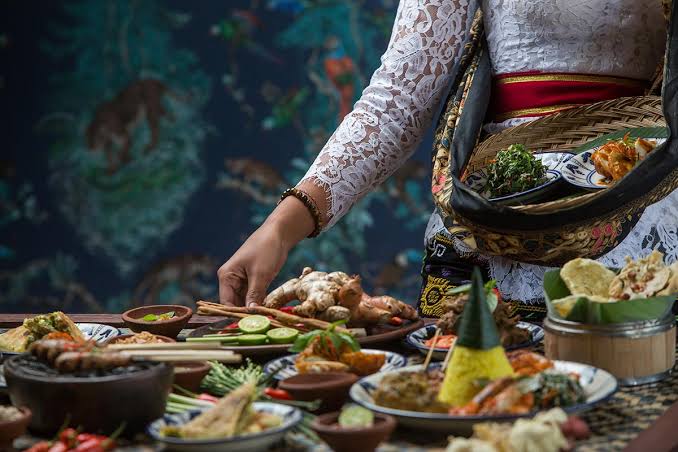
My own route into Bali began in the kitchen. As Executive Chef at Conrad Bali and through our iconic restaurant, SPICE, I discovered an island whose food seemed to open a door onto a much larger story. Later, my work with Chris Salans of Mozaic and my involvement with Hanging Gardens of Bali gave me other ways to follow that trail. But the story belongs first to Bali itself: to its cooks, its fields, its ceremonies, and the history carried in its food.
An island at the crossroads
Bali has never been cut off from the wider Indonesian world. Archaeological evidence points to trade linking the island with India and China through the Java Sea as early as the first century. Over the centuries, people, ingredients, and ideas moved across the archipelago. Cultural currents from India and Java helped shape Bali’s religious and courtly life, while local communities made those influences their own.
That distinction matters. Balinese cuisine is not simply a collection of outside influences, nor a smaller version of Indonesian cooking. Its story is one of exchange and adaptation: new ideas arriving by sea, meeting local ingredients, village customs, and ancestral traditions, then taking on a distinctly Balinese character.
Rice sits at the centre of this history. It is the daily staple, but it also carries social and spiritual meaning. The subak system coordinates irrigation and rice cultivation through shared community organisation and ritual. Bali’s fields are not just scenery behind the cuisine; they are part of the culture that sustains it. Old Balinese inscriptions also record a varied food landscape of rice, pulses, meat, and fish—an early reminder that the island’s table has always held more than one story.

The secret is in the base
To follow the flavour of Bali, begin with base genep, often translated as the “complete spice paste.” There is no single formula that every cook follows. Shallot, garlic, chilli, turmeric, ginger, galangal, candlenut, lemongrass and fragrant leaves may all appear, in proportions shaped by the cook, the dish and the occasion. Pounded together, they create a deep aromatic foundation that can be earthy, warm, sharp and bright all at once.
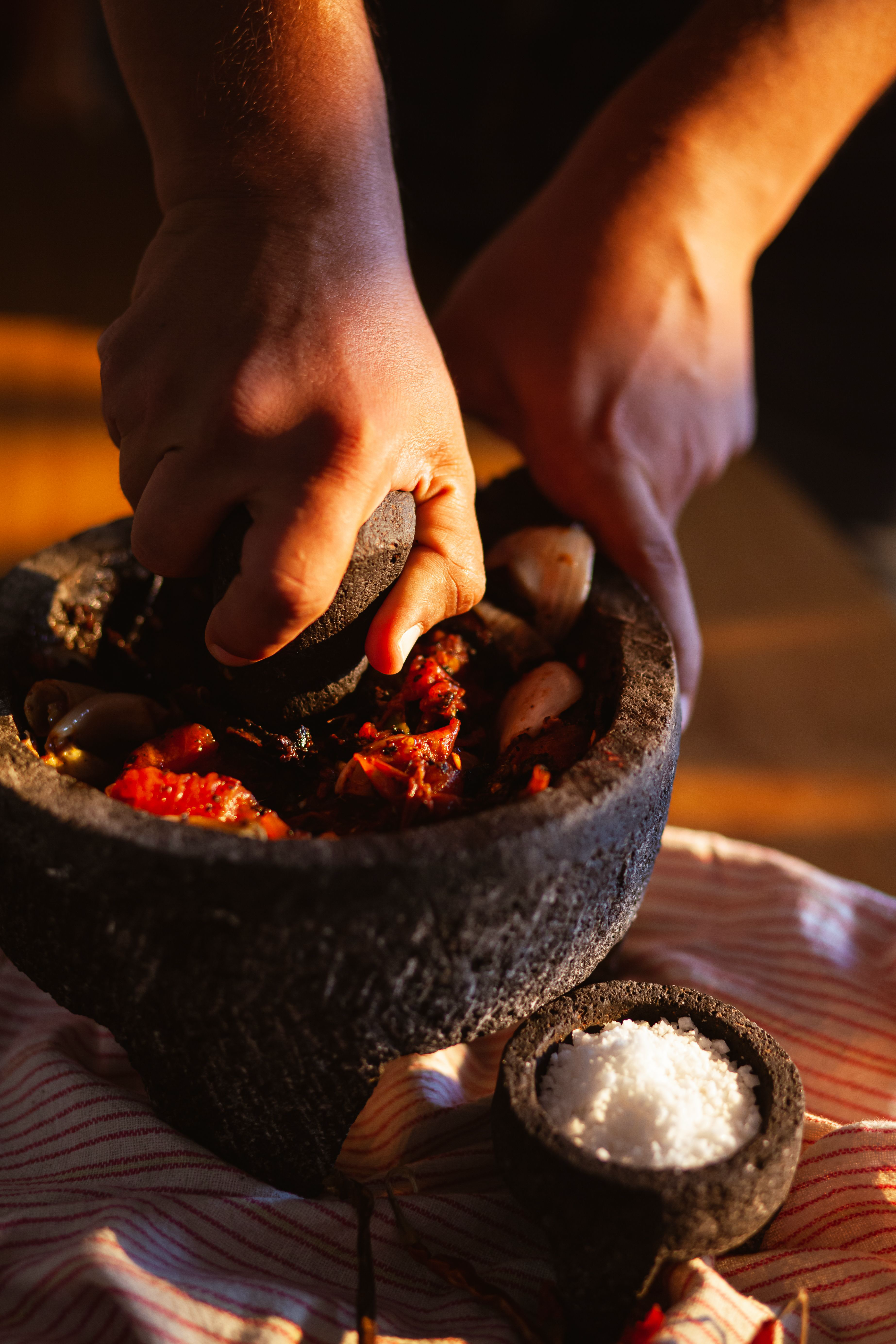
From this starting point, each dish takes its own path. Betutu is one of the clearest examples of how spice, technique and time come together in Balinese cooking.
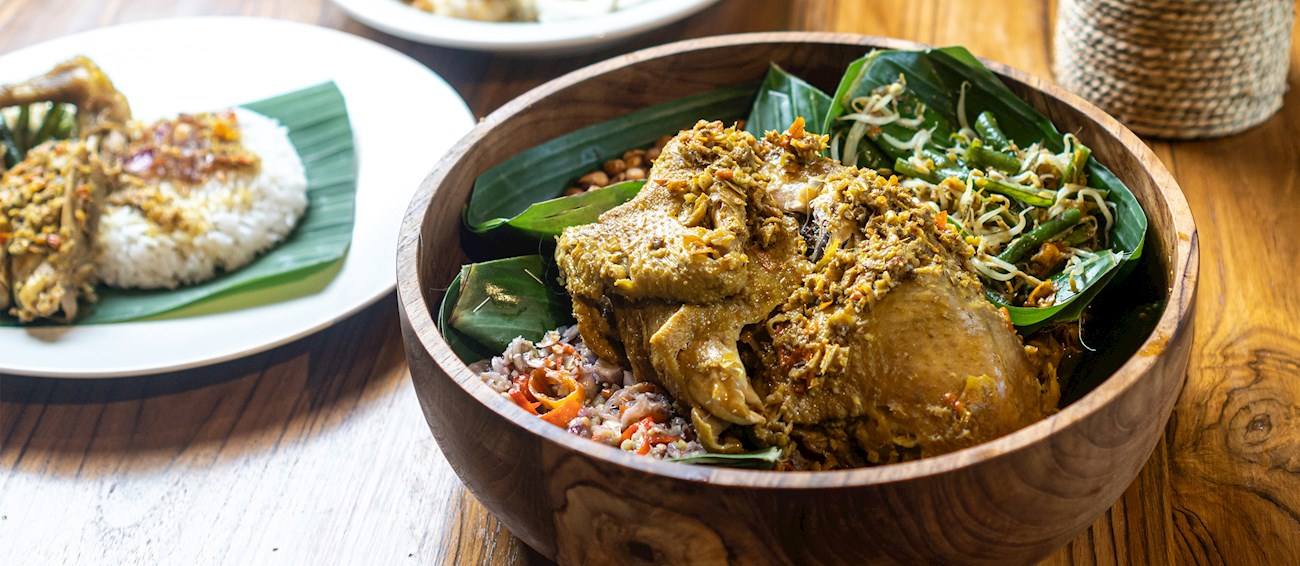
Betutu: chicken, duck and the slow fire
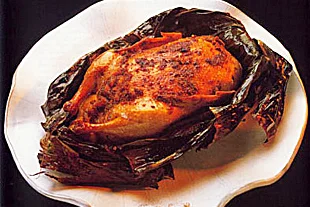
Ayam betutu is made with chicken; bebek betutu uses duck. The bird is generously seasoned with Balinese spices, wrapped—often in banana leaves or areca-palm fronds—and cooked slowly until the meat is tender and the seasoning has worked its way through. In the traditional method, it is buried with hot stones and embers, allowing it to cook gently in the ground. The preparation takes patience; betutu is a dish built around time as much as spice.
Some accounts associate this underground, hot-stone method with a culinary inheritance from the Majapahit era. The precise history is layered, but the dish itself carries a sense of continuity: an old technique, adapted by generations of Balinese cooks and still prepared in different ways around the island.
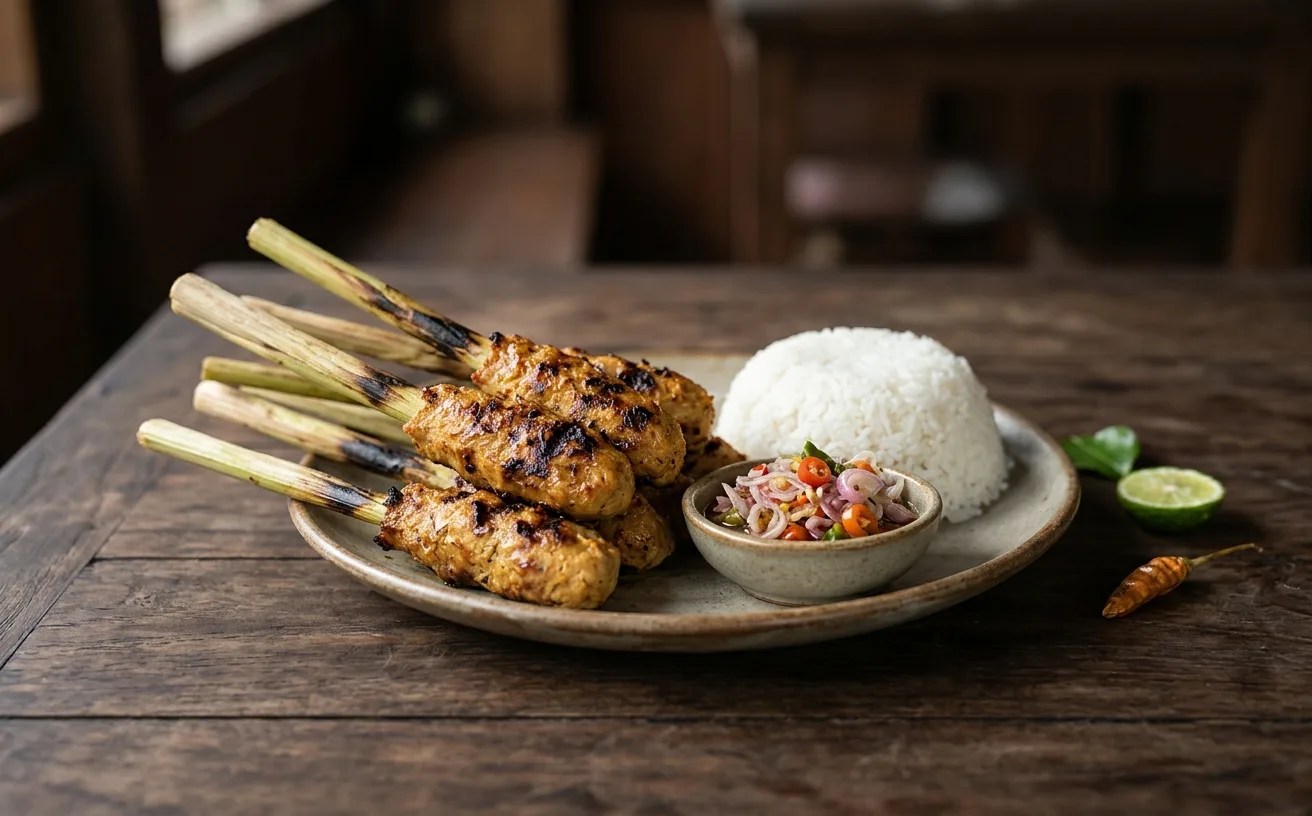
Then the trail branches again. Lawar combines finely chopped vegetables, coconut, and spices and may include meat. It is not one fixed recipe: ingredients shift with locality, family, and occasion. Coastal versions are sometimes said to use more coconut, while mountain preparations may make greater use of jackfruit. Sate lilit takes seasoned minced fish or meat, often mixed with coconut, and shapes it around a bamboo skewer or lemongrass stalk before grilling. Beside it, sambal matah—fresh, vivid, and sharp—brings the whole plate into focus.
Not every Balinese dish begins with meat. Jukut ares is a savory soup made with the tender inner stem of the banana plant, a reminder of the resourcefulness of the island’s cooking. Banana leaves wrap and perfume foods; stems and flowers find their way into soups and stews. The plant world offers its own route through the cuisine.
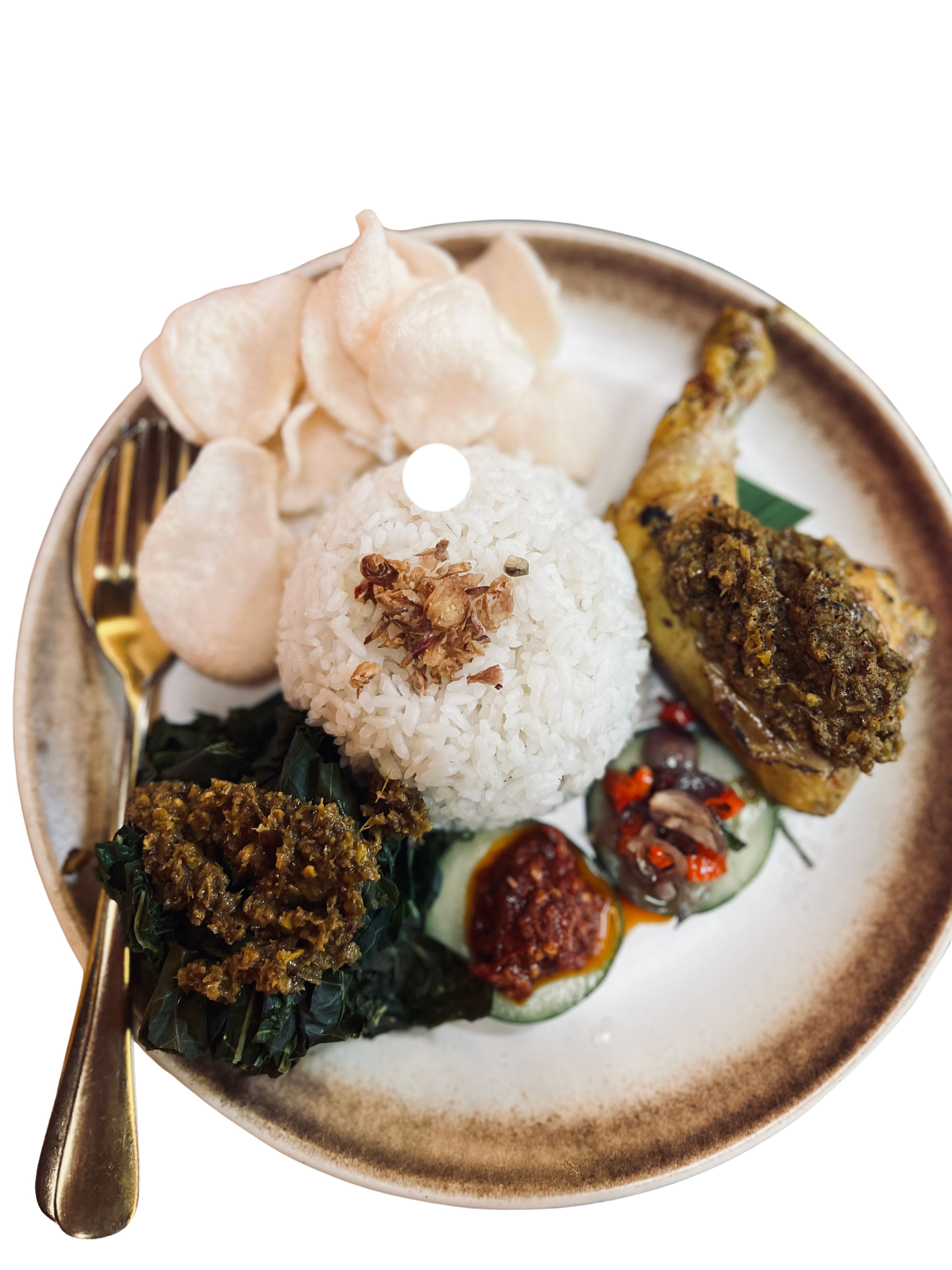
On a plate of nasi campur Bali, these paths meet. Rice is surrounded by small portions of different dishes: perhaps sate lilit, lawar, betutu, vegetables and sambal. It is a meal that rewards curiosity. There is no single route across the plate, and the next mouthful may take you somewhere entirely different.
Babi Guling: A Feast with a History
To speak honestly about Balinese food, we should speak plainly about pork. In many parts of Indonesia, Muslim dietary practice excludes it. In Balinese Hindu tradition, pork is not prohibited, and it has an important place in the island’s cuisine.
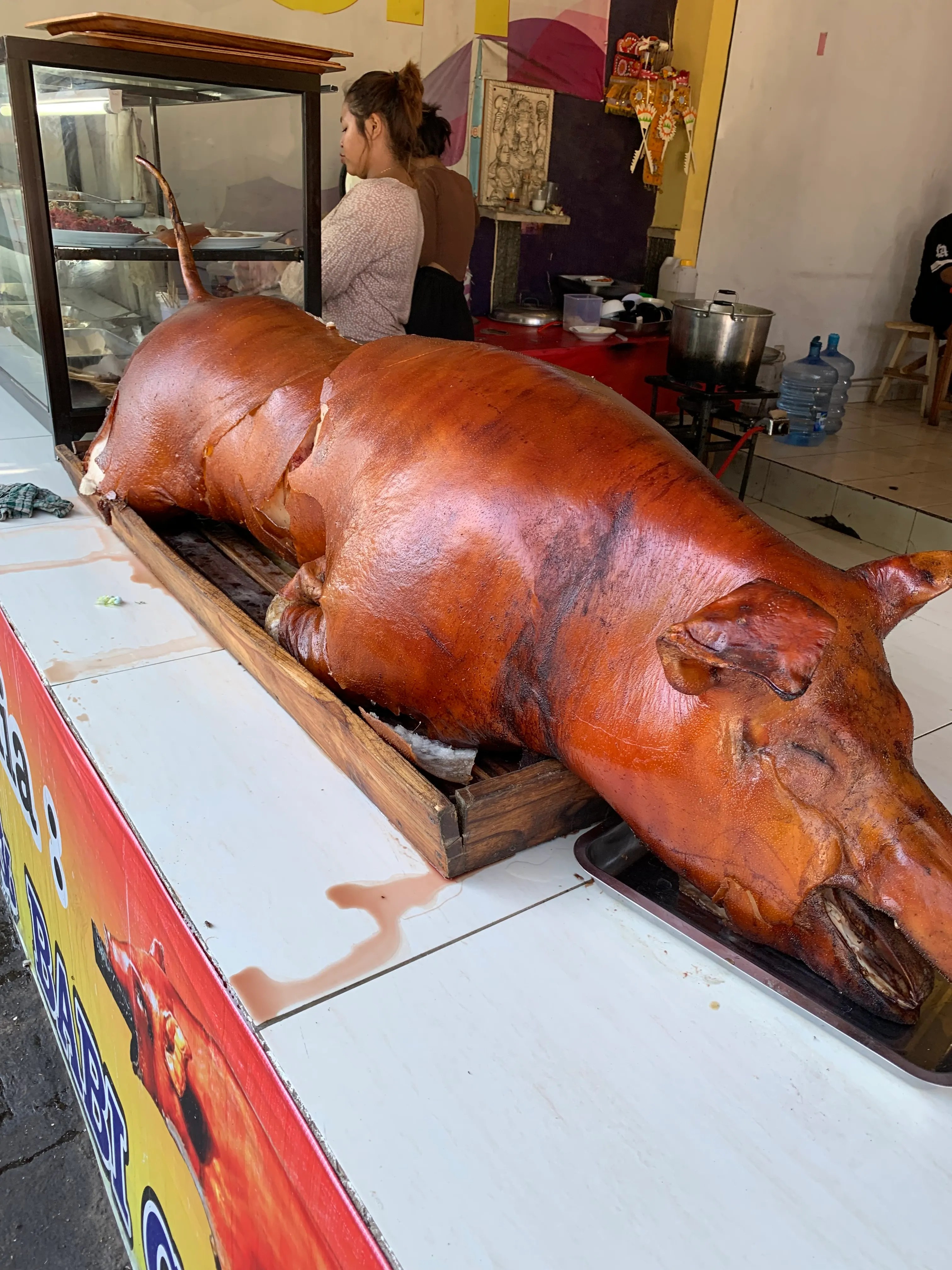
Babi guling—a whole pig slowly turned over the fire until the skin is crisp and the meat tender—is often described informally as Bali’s national dish. The title is not an official designation, but the affection behind it is easy to understand. Served with rice, lawar and sambal, it is one of the island’s most recognizable feasts.
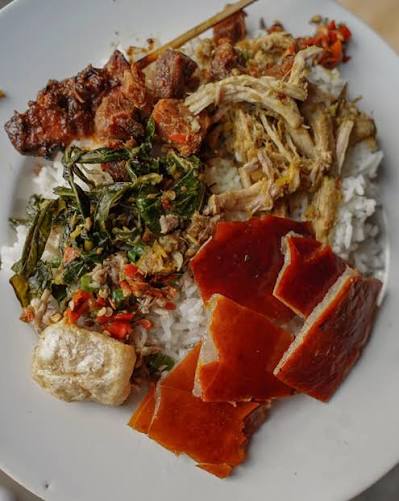
Its history reaches beyond the restaurant table. Babi guling has long been associated with ceremonial life and communal celebration. Food historians have traced how it also became a widely sold restaurant dish and a symbol of Balinese identity as colonial history, national culture and tourism reshaped the island. At important celebrations such as Galungan and Kuningan, dishes including babi guling, betutu, lawar and sate lilit may be prepared for ceremonial offerings and shared feasts. The same food can carry different meanings at a ceremony, a family gathering or a warung.
Food offered, shared and remembered
In Bali, food can be nourishment, hospitality, and offering. Fruits, rice, cakes and prepared dishes form part of religious and ceremonial practices, expressing gratitude and a relationship with nature and the divine. In the everyday practice known as saiban or jotan, a portion of freshly cooked rice is set aside as an offering before the household eats. It is a small gesture that points to a larger idea: food is received, shared and given back.
This does not make every meal a ritual. It does mean that Balinese food sits within a world of belief, community and daily life. That context is one of the things that sets the island’s cuisine apart, even as it shares ingredients and culinary currents with the rest of Indonesia.
Balinese cuisine belongs to the Indonesian archipelago, sharing its broad pantry of rice, coconut, chillies, seafood, meat, and spices. Yet its particular combination of Hindu-Balinese ritual, local agriculture, spice pastes and a distinctive place for pork gives it a culinary identity that cannot be mistaken for another island’s.
My years in Bali have been a privilege and a way into this story. The adventure continues in the hands of Balinese cooks, in family recipes, ceremonial kitchens and the changing life of the island’s warungs and restaurants.
Follow the flavors far enough, and a Balinese meal becomes more than a collection of celebrated dishes. It is a map of the island: its history, its beliefs, its landscape, and its openness to the wider world. Every plate offers another clue—and another road to follow.